Our New Java Books and Videos
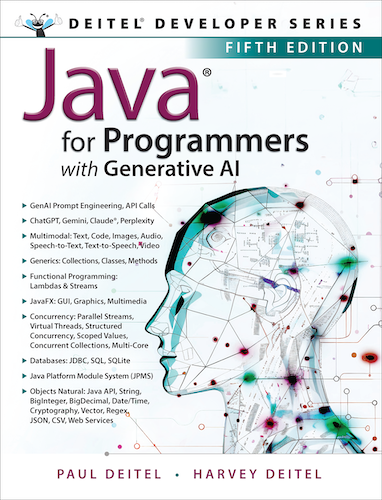
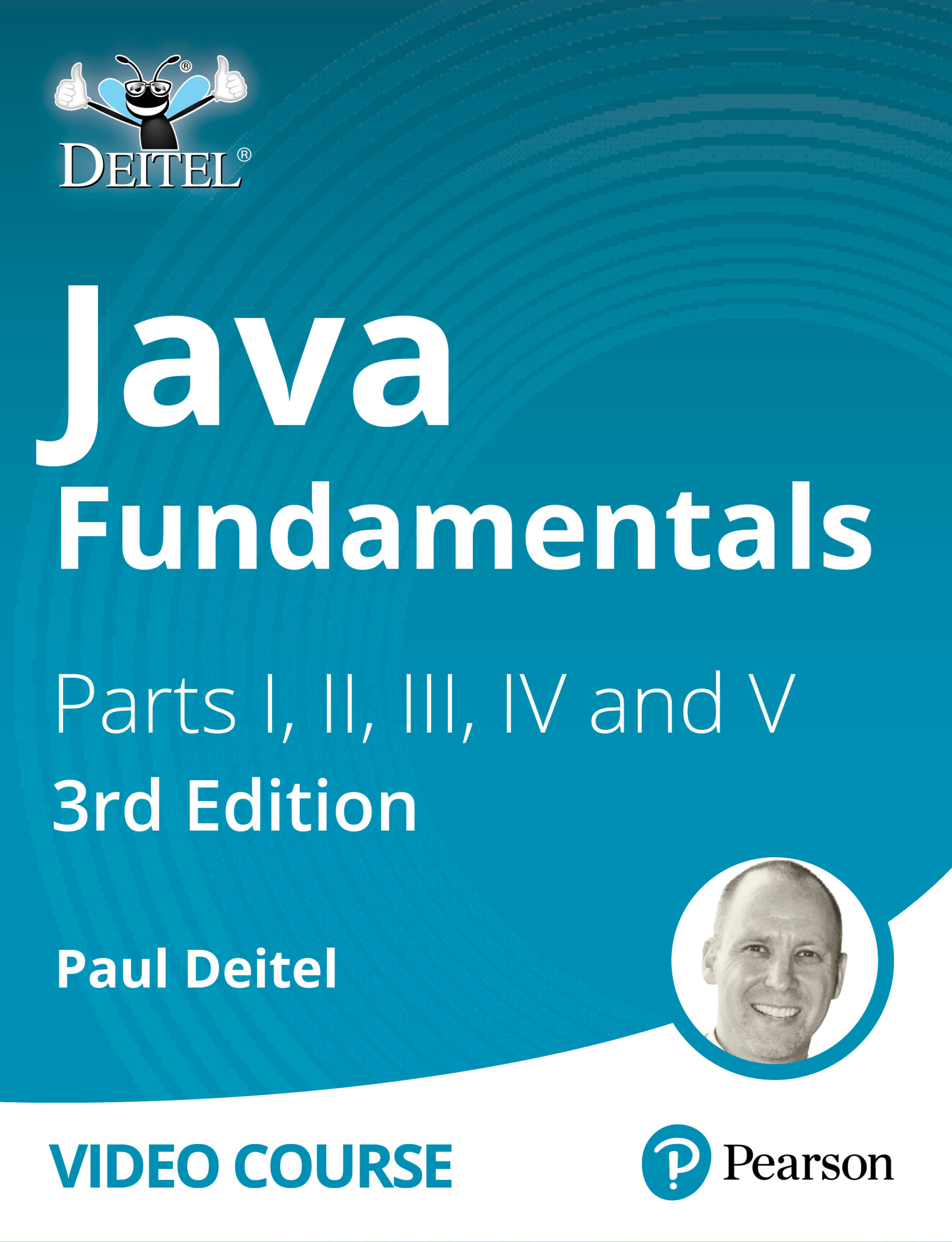
Java How to Program: An Objects-Natural Approach, 12/e, Enhanced with GenAI; Java for Programmers with Generative AI, 5/e; Java Fundamentals LiveLessons, 3/e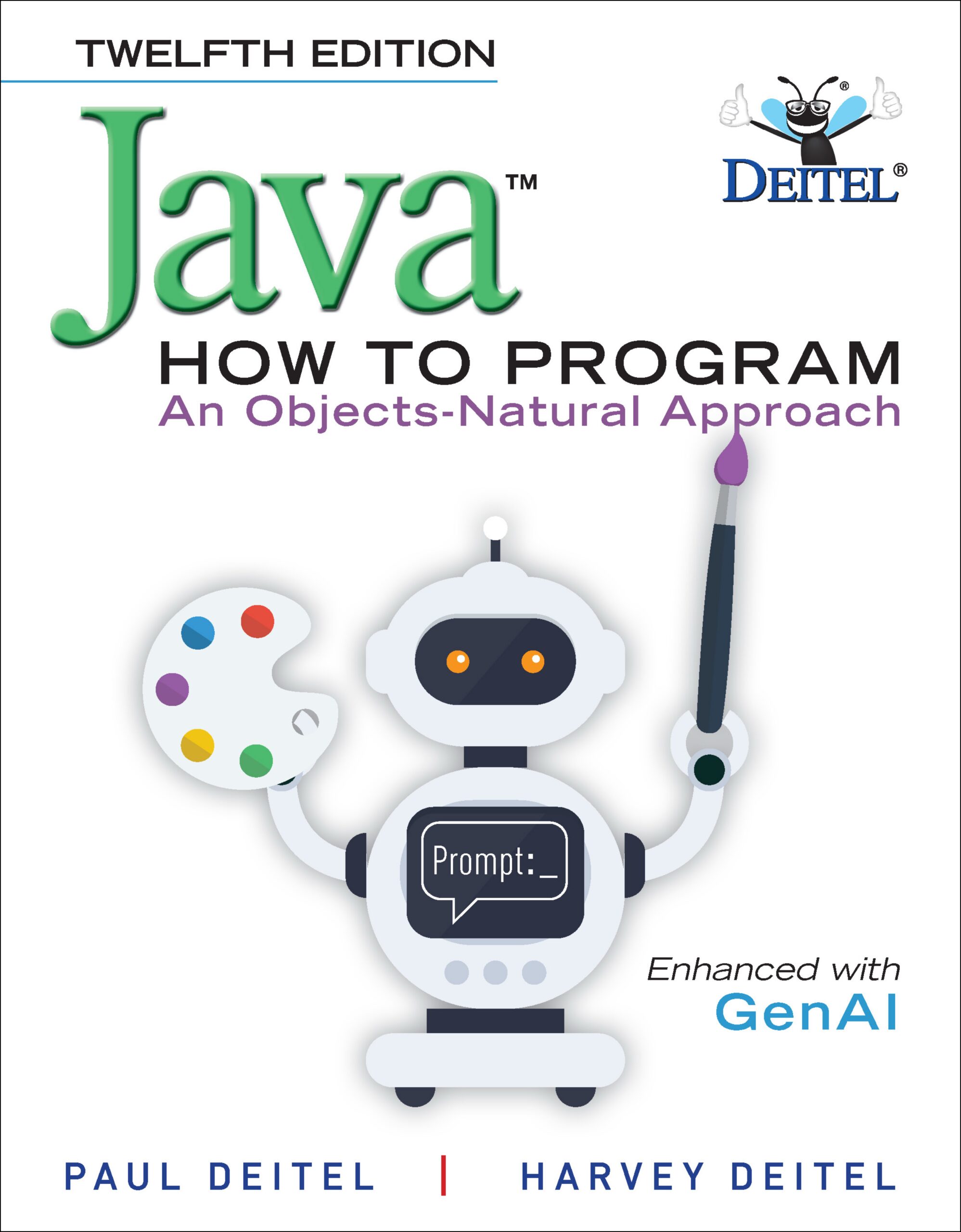
Our Recent C++ Books and Videos
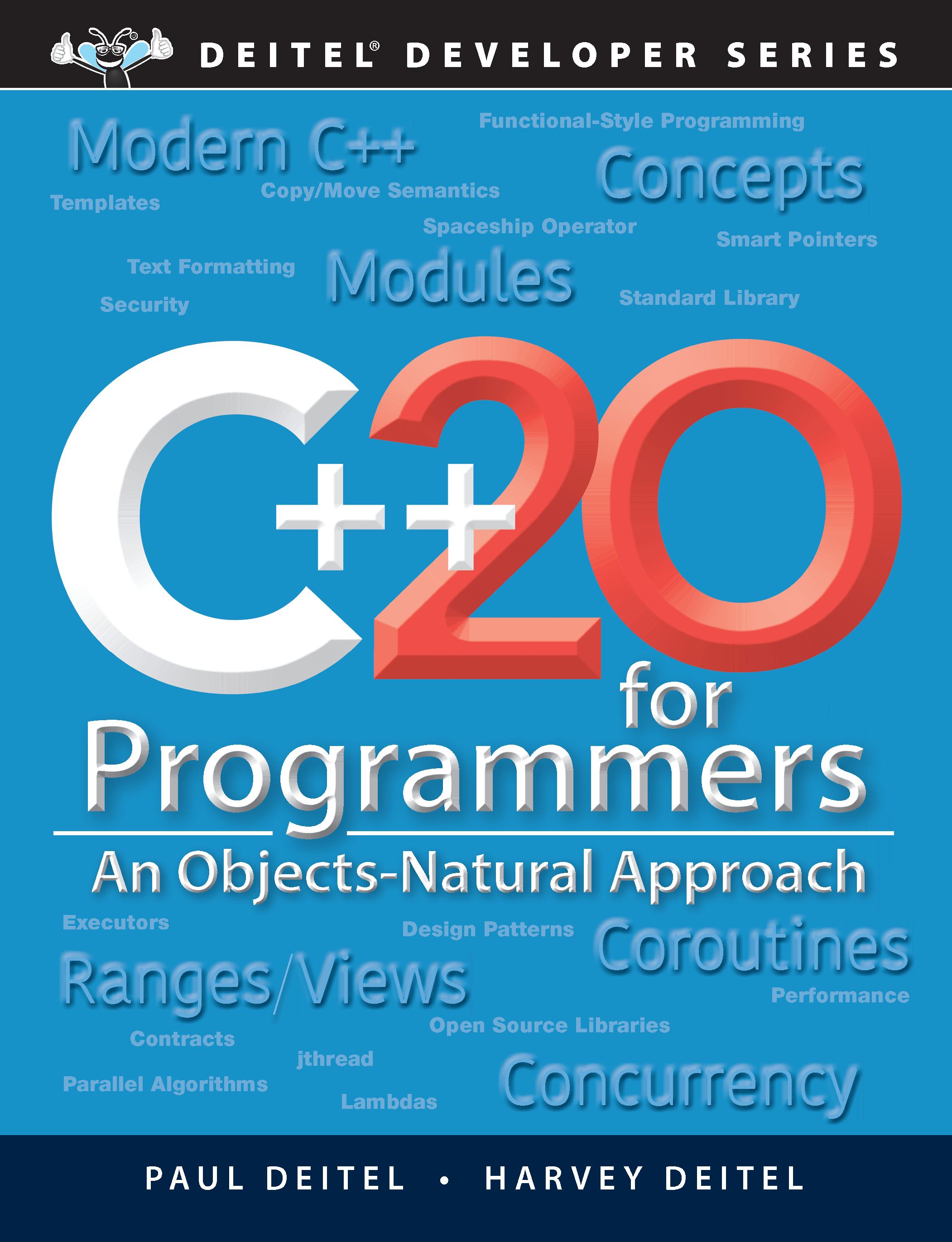
C++ How to Program: An Objects-Natural Approach, 11/e; C++20 for Programmers; C++20 Fundamentals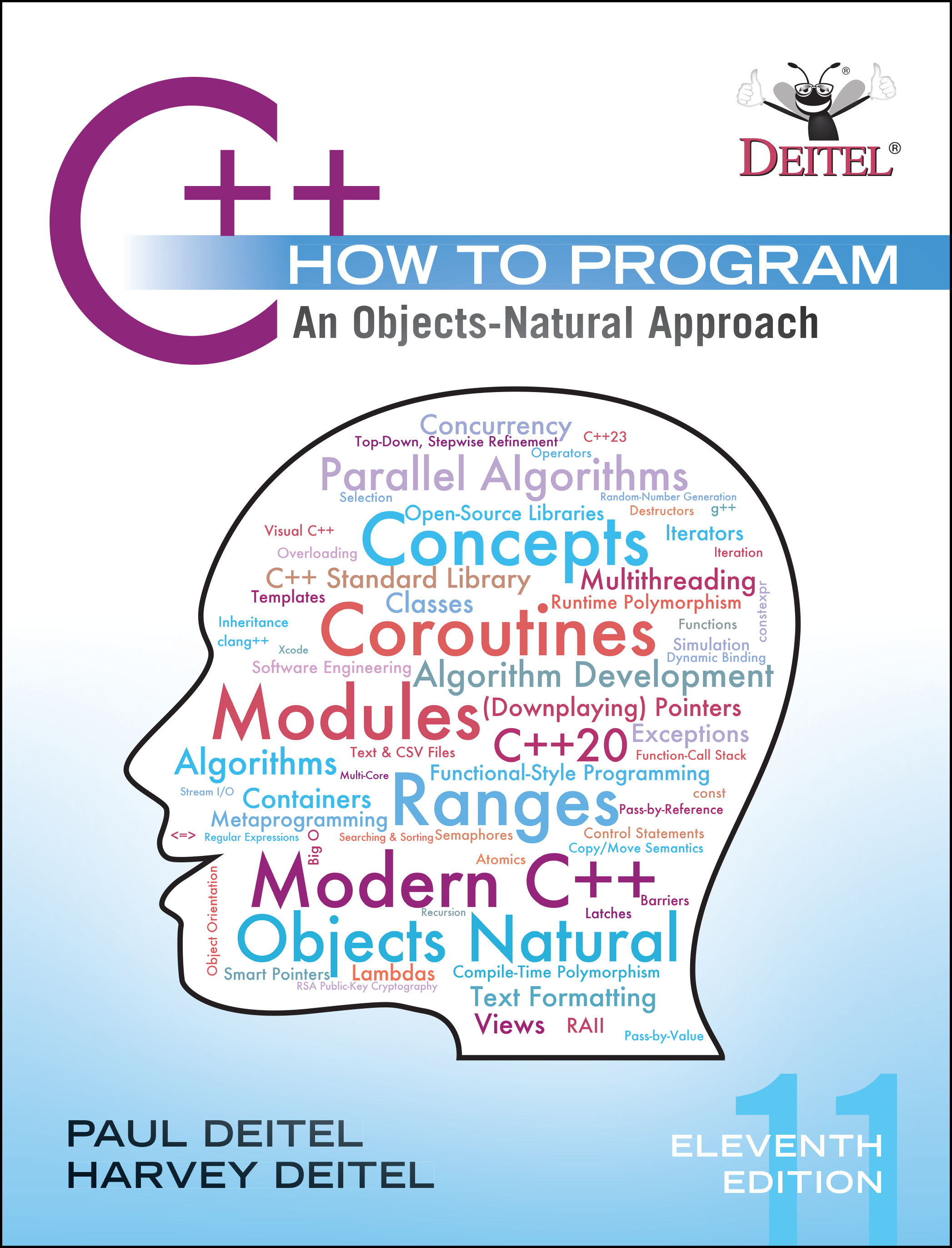
Other Recent Books
Intro to Python for Computer Science and Data Science: Learning to Program with AI, Big Data and the Cloud; Python for Programmers; C How to Program, 9/e & C++20 for Programmers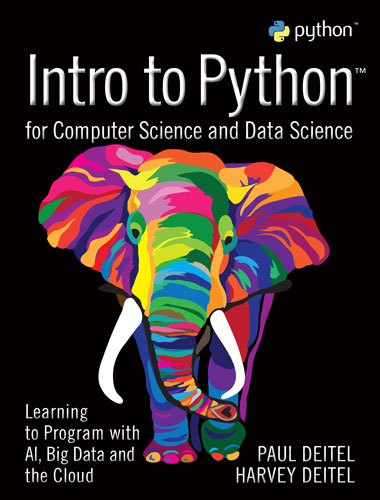
Learn hands-on with today’s most compelling, leading-edge computing technologies. Provides an easily tunable mix of computer science and data science appropriate for introductory courses in those and related disciplines.
College Instructors: Get Your Free Examination Copy
Find Your Pearson Representative
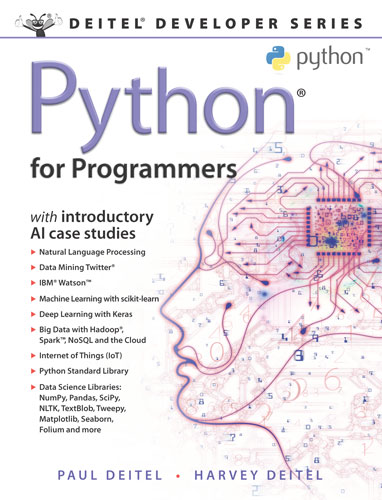
The professional programmer’s Deitel® guide to Python® with introductory AI case studies
Written for programmers, this book presents a hands-on intro to today’s most compelling, leading-edge computing technologies and Python—one of the world’s most popular and fastest-growing languages.
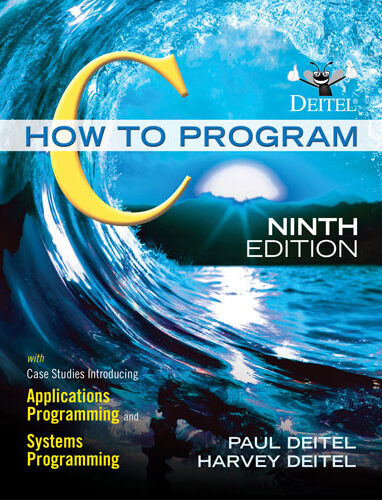
An innovative, topical, code-intensive, case-study-oriented presentation of C—one of the world’s most popular programming languages. Appropriate for intro- and intermediate-level C courses using traditional or “flipped” classrooms.
College Instructors: Get Your Free Examination Copy
Find Your Pearson Representative
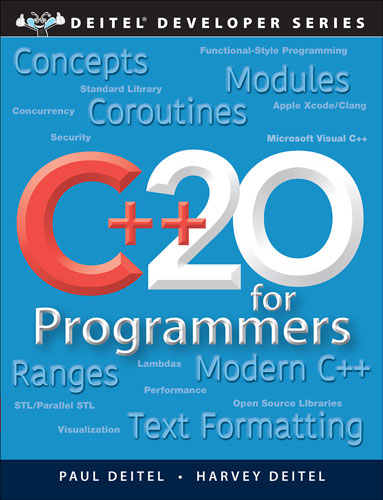
The professional programmer’s Deitel® guide to Modern C++ Using C++20
Written for programmers with a background in another high-level language, C++20 for Programmers applies the Deitel signature live-code approach to teaching Modern C++ and explores the C++20 language and libraries in depth.
Learn Python & Python Data Science/AI with Paul Deitel
One of the World's Most Experienced Programming-Languages Trainers
Paul Deitel
Congratulations, Paul. Your classes rock! 10,000 students is quite an achievement. https://t.co/fHrfDGDyAj
— timoreilly (@timoreilly) November 18, 2020
Our Python courses are based on our innovative new textbook Intro to Python for Computer Science and Data Science: Learning to Program with AI, Big Data and the Cloud. Co-author Paul Deitel uses the interactive IPython interpreter and Jupyter Notebooks to help you quickly master the latest Python coding idioms, key Python Standard Library modules, popular open-source libraries, and many of today’s most compelling, leading-edge data science, AI and big data computing technologies, including cool, powerful, contemporary case studies on:
- Natural Language Processing
- Data Mining Twitter®
- Speech Recognition, Speech Synthesis and Language Translation with IBM Watson®
- Supervised Machine Learning—Classification and Regression
- Unsupervised Machine Learning—Clustering
- Computer Vision with Deep Learning and a Convolutional Neural Network
- Sentiment Analysis with Deep Learning and a Recurrent Neural Network
- MongoDB NoSQL Document Database
- Hadoop MapReduce with Hadoop Streaming
- Spark and Spark Streaming
- Internet of Things (IoT) Streaming Data
Instructor-Led Training Options
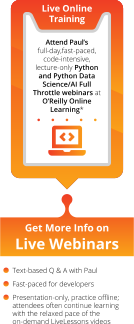
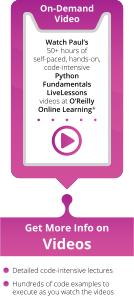
Infographic vector created by freepik – www.freepik.com
Blog Posts
I am Looking for ...
Textbooks and Professional Books
Our textbooks and Deitel Developer Series professional books covering today’s most popular programming languages, including Python, Java, C, C++, C#, JavaScript and more…
Live or Self-Paced Instructor-Led Training
Instructor-led live training and self-paced video training presented by Paul Deitel—one of the world’s most experienced programming-languages trainers, having taught programming since 1992.
Share This Page